A motorcycle VIN check can help you verify a bike’s identity, title history, theft records, salvage clues, recall status, and basic specifications before you buy. It can also help you spot mismatched paperwork, suspicious seller claims, and hidden risks that may not be obvious during a quick walkaround.
But a bike VIN report has limits. It may not show every accident, repair, service visit, ownership detail, lien, modification, or mechanical problem. Some motorcycle records are less complete than car records, especially for older bikes, private-party sales, custom builds, off-road motorcycles, and owner-maintained machines.
That is why a motorcycle VIN check should be part of your buying process, not the whole process. Use the report to screen the bike, then verify the title, inspect the VIN locations, check for recalls, review maintenance records, and have the motorcycle inspected before paying.
Why Motorcycle VIN Checks Matter
Motorcycles can be easier to move, modify, part out, and resell than cars. A bike may look clean in photos but still have title problems, theft history, salvage records, mileage inconsistencies, frame damage, flood exposure, or missing paperwork.
A VIN check helps answer important buyer questions:
- Does the VIN match the title and frame?
- Is the bike the correct year, make, and model?
- Does the title show salvage, rebuilt, flood, or junk history?
- Has the motorcycle been reported stolen or unrecovered?
- Are there recall concerns?
- Does the seller’s story match available records?
- Is the asking price reasonable for the bike’s history?
Before buying, run a motorcycle VIN check and compare the results with the actual motorcycle and documents.
What Is a Motorcycle VIN?
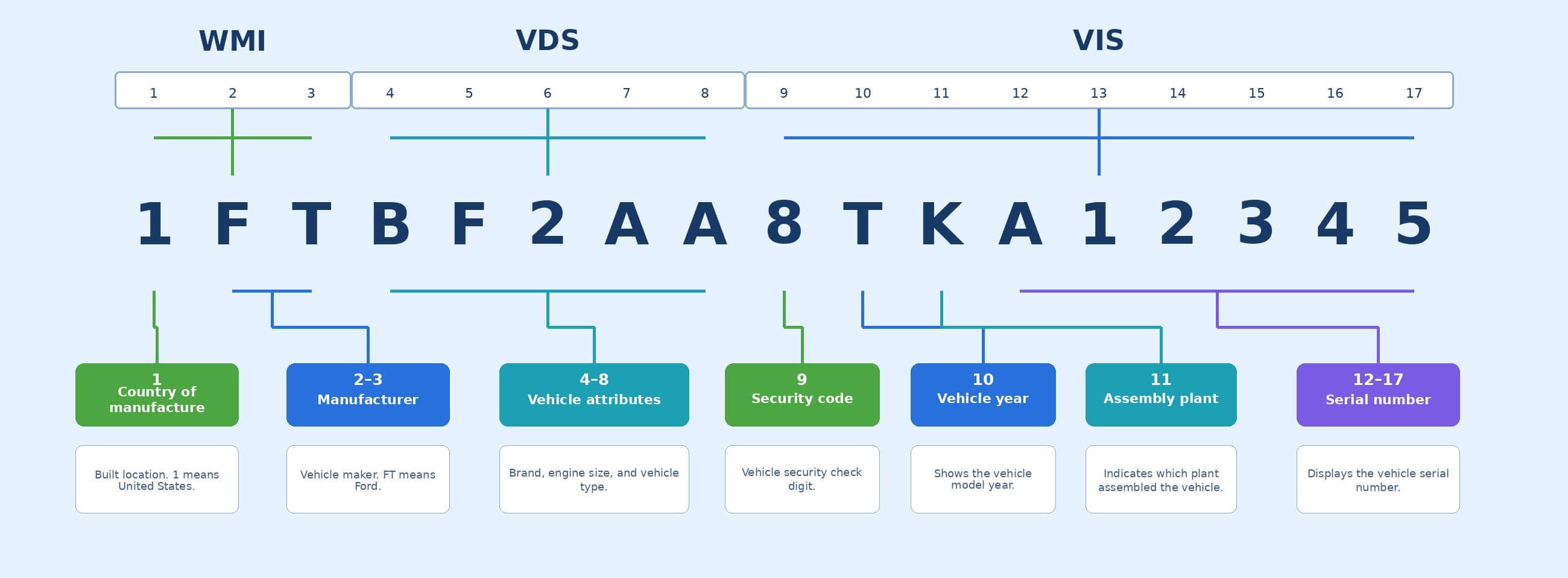
A motorcycle VIN is the vehicle identification number assigned to the bike. For most modern motorcycles, it is a 17-character code that identifies the manufacturer, vehicle attributes, model year, plant information, and unique serial sequence.
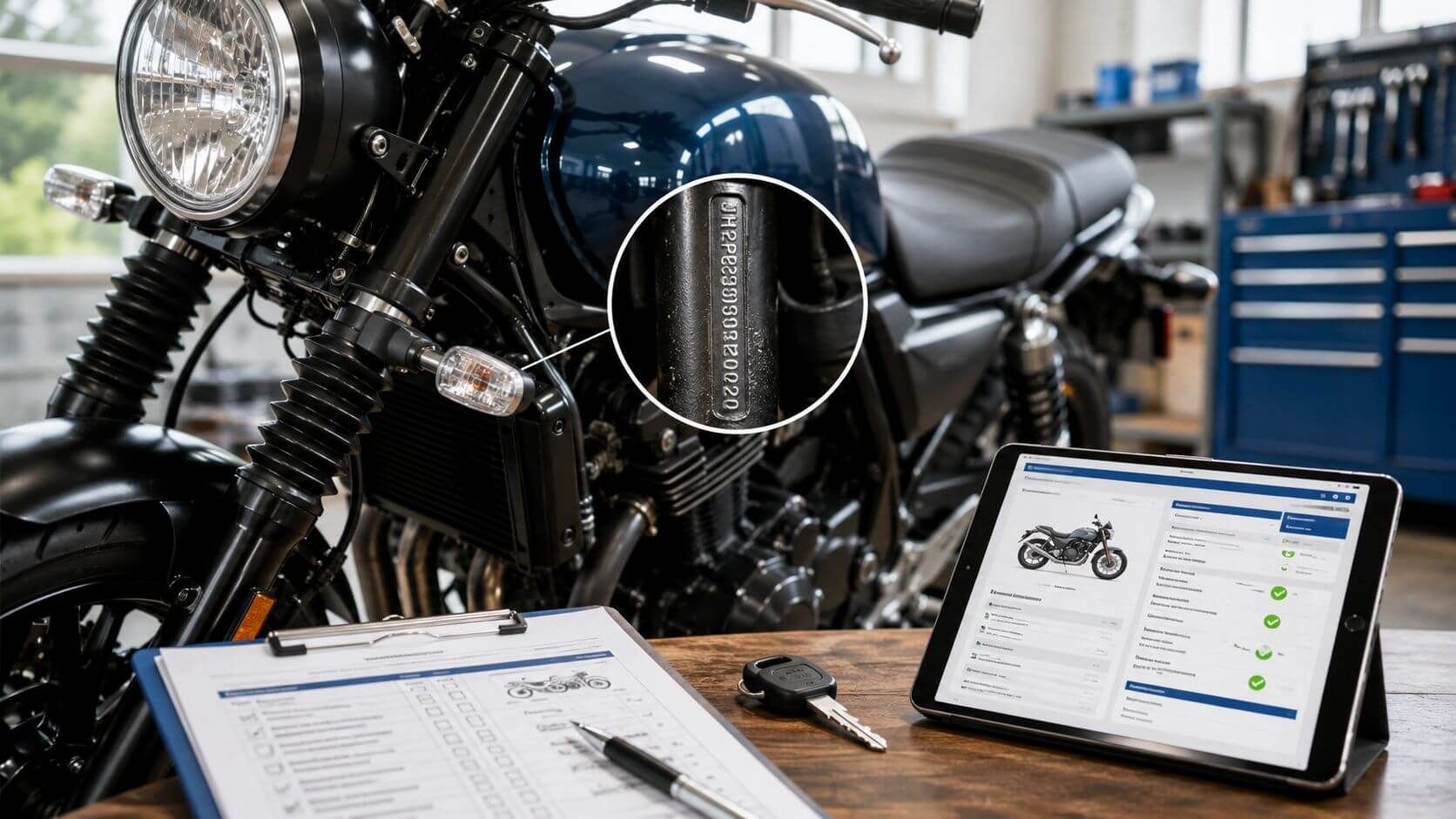
The VIN is commonly found on:
- Steering neck or frame head
- Frame rail
- Engine area or frame plate
- Manufacturer label
- Title
- Registration
- Insurance documents
- Service records
- Seller listing
Exact VIN locations vary by manufacturer, model, and year. Some older motorcycles may not follow the same 17-character VIN format used on newer vehicles. For older, classic, imported, custom, or rebuilt bikes, title and frame verification become even more important.
Start With a Basic VIN Decode
Before reviewing title history, confirm that the VIN itself matches the motorcycle. A free VIN decoder can help you check basic identity details such as make, model year, manufacturer, body type, and other encoded information when available.
A basic VIN decode can help catch problems like:
- Seller lists the wrong year
- Bike is advertised as a different model
- Frame VIN does not match the paperwork
- VIN appears incomplete or altered
- Imported or custom bike details are unclear
- Listing information was copied from another motorcycle
If the decoded information does not match the bike, stop and ask questions before moving forward.
What a Motorcycle VIN Report Can Tell You
A motorcycle VIN report may show several useful records, depending on the bike, data sources, and reporting history.
Title History
A report may show title events, title states, title issue dates, and possible title brands. This helps you see whether the motorcycle has moved across states or has a history that needs closer review.
Salvage or Rebuilt Records
A bike with salvage or rebuilt history may have been damaged, declared a total loss, repaired, and returned to use. This does not always mean the motorcycle is unsafe, but it does mean you need repair records, inspection proof, and a price that reflects the risk.
Use a title check by VIN when title brands, ownership history, or transfer concerns appear.
Theft Records
A VIN report or theft lookup may help identify whether a motorcycle has been reported stolen or remains unrecovered. This is critical because buying a stolen motorcycle can lead to loss of the bike and legal complications, even if you paid in good faith.
Mileage or Odometer Clues
Some reports may show mileage readings from title events, inspections, service records, or sale listings. For motorcycles, mileage records may be less consistent than car records, so compare the report with the odometer, title, inspection records, and condition.
Recall Information
A motorcycle VIN report may point to recall concerns, but recall status should be checked separately by VIN. Motorcycle recalls can involve brakes, fuel systems, electrical components, lights, controls, suspension, tires, or other safety-related systems.
Sale and Auction History
Some motorcycles may show auction, dealer, or sale-history records. This can help explain ownership changes, price movement, and possible damage history.
Basic Specifications
A report may show basic specs such as make, model, year, engine type, fuel type, motorcycle type, and manufacturer details.
What a Motorcycle VIN Report Cannot Guarantee
A motorcycle VIN report is helpful, but it is not a guarantee that the bike is safe, clean, or problem-free.
A report may not show:
- Every accident
- Every repair
- All service history
- Owner-performed maintenance
- Unreported theft or recovery events
- Aftermarket modifications
- Frame repairs not reported to insurance
- Track use or racing history
- Off-road abuse
- Flood exposure that was never reported
- Current mechanical condition
- Hidden liens in every situation
- Whether the seller is legally able to transfer title
This is why a clean report should be treated as a good sign, not final proof.
Why Motorcycle Reports Can Be Less Complete
Motorcycle history can be harder to track than car history. Many bikes are maintained by owners, independent shops, or small repair businesses that may not report service data. Some bikes are sold privately several times. Others are modified, stored for long periods, used seasonally, or rebuilt from parts.
Motorcycles may also have lower annual mileage than cars, which means fewer odometer entries. A bike can be ten years old with very few official records.
“No record found” does not always mean the bike is clean. It may simply mean the motorcycle has limited reportable history.
Check the VIN on the Bike Itself
Always inspect the VIN physically. Do not rely only on the seller’s listing or a photo.
Look for:
- VIN plate or stamp in the expected location
- Matching VIN on title and frame
- Signs of grinding, scratching, repainting, or tampering
- Missing manufacturer label
- Unusual rivets or plate replacement
- VIN that looks uneven or altered
- Frame replacement or rebuilt frame clues
If the VIN appears altered, damaged, or inconsistent, walk away or verify through official channels before paying.
Compare the VIN With the Title
The title should match the motorcycle exactly. Check:
- VIN
- Year
- Make
- Model
- Seller name
- Odometer information, if applicable
- Title brands
- Lienholder information
- Signatures
- Alterations or erasures
Be careful if the seller says the title will arrive later, the title is in another person’s name, or the bike is being sold with only a bill of sale when a title should be available.
A motorcycle without a proper title can become difficult or impossible to register, insure, or resell.
Check for Title Brands
Title brands can significantly affect a motorcycle’s value and risk. Watch for labels such as:
- Salvage
- Rebuilt
- Reconstructed
- Flood
- Junk
- Parts only
- Lemon
- Odometer discrepancy
- Theft recovery
A branded-title motorcycle may still be rideable, but it should be inspected carefully and priced lower than a similar clean-title bike. Ask for repair records, parts receipts, inspection documents, and insurance confirmation before buying.
Check for Liens
A lien means a lender or another party may have a financial interest in the motorcycle. If the seller financed the bike and the lien is not released, you may not receive clear ownership.
Before buying, ask:
- Is there a lien on the title?
- Has the loan been paid off?
- Is there a lien release?
- Is the title electronic?
- Will the lender be involved in the transfer?
- Can the transaction be completed at the bank or DMV?
Do not pay in full based only on a promise that the lien will be cleared later.
Inspect the Motorcycle Beyond the Report
A VIN report cannot tell you how the motorcycle rides today. A physical inspection is essential.
Check:
- Frame alignment
- Forks and triple tree
- Handlebar straightness
- Tires
- Brakes
- Chain or belt
- Sprockets
- Leaks
- Lights
- Controls
- Clutch
- Throttle
- Suspension
- Engine noise
- Exhaust smoke
- Warning lights
- Signs of crash damage
- Rust or corrosion
- Aftermarket wiring
For high-value, sport, touring, adventure, or custom motorcycles, consider a professional pre-purchase inspection.
Ask About Modifications
Many motorcycles are modified. Some changes are harmless. Others can affect safety, reliability, emissions, warranty, insurance, or resale value.
Ask about:
- Exhaust changes
- ECU tuning
- Intake modifications
- Suspension changes
- Lowering kits
- Frame modifications
- Lighting changes
- Handlebar swaps
- Brake upgrades
- Engine work
- Track use
- Custom paint or bodywork
A VIN report may not show these changes. Inspect the bike and ask for receipts.
Motorcycle VIN Check Buyer Checklist
| What to Check | Why It Matters |
|---|---|
| VIN decode | Confirms basic bike identity |
| Frame VIN | Helps detect tampering or mismatch |
| Title VIN | Confirms paperwork matches the bike |
| Title brands | Reveals salvage, rebuilt, flood, or other history |
| Theft records | Helps avoid stolen motorcycle risk |
| Lien status | Helps confirm clear ownership |
| Mileage records | Helps spot odometer concerns |
| Recall status | Helps identify unresolved safety issues |
| Service records | Shows maintenance and repairs |
| Physical inspection | Confirms current condition |
Red Flags to Watch For
Be cautious if:
- Seller refuses to provide the VIN
- VIN on the title does not match the frame
- VIN looks altered or damaged
- Title is missing
- Title is not in the seller’s name
- Bike is sold with only a bill of sale
- Seller says paperwork can be fixed later
- Salvage history was not disclosed
- Odometer records do not make sense
- Bike has signs of crash damage
- Seller refuses inspection
- Price is far below market with no clear reason
A clean-looking motorcycle can still have serious paperwork or history problems.
When a Motorcycle VIN Report Is Most Useful
A VIN report is especially useful when:
- Buying from a private seller
- Buying out of state
- Buying a bike with no service records
- Buying a salvage or rebuilt motorcycle
- Buying an older bike with limited paperwork
- Buying a high-value or performance motorcycle
- Buying from an online listing
- Comparing two similar motorcycles
- Verifying title and theft concerns before travel
The report helps you decide whether the bike is worth seeing, inspecting, and negotiating.
Bottom Line
A motorcycle VIN check can help you verify a bike’s identity, title history, theft records, salvage clues, mileage patterns, recall concerns, and basic specifications. It is one of the easiest ways to screen a used motorcycle before buying.
But a VIN report cannot guarantee that the bike is mechanically sound, accident-free, lien-free in every case, properly maintained, or safe to ride. It cannot replace a title review, physical VIN inspection, maintenance records, seller verification, or a mechanic’s inspection.
Before buying, check the VIN, decode the bike, review title records, inspect the frame, verify recalls, ask for service history, and confirm the seller can legally transfer ownership. If the VIN, title, records, and motorcycle do not match, walk away.
FAQs
Can I run a VIN check on a motorcycle?
Yes. A motorcycle VIN check can help verify the bike’s identity, title history, theft records, salvage clues, mileage patterns, recalls, and basic specifications when available.
Where is the VIN on a motorcycle?
Common locations include the steering neck, frame head, frame rail, manufacturer label, title, registration, and insurance documents. Exact locations vary by manufacturer and model year.
Can a motorcycle VIN report show theft history?
It may show theft-related records when available, especially if the motorcycle was reported stolen or unrecovered through participating data sources. Always compare the VIN with the title and seller documents.
Does a clean motorcycle VIN report mean the bike is safe?
No. A clean report is helpful, but it does not guarantee mechanical condition, accident-free history, proper maintenance, or safe operation. Always inspect the motorcycle before buying.
Should I buy a motorcycle without a title?
Be very careful. A motorcycle without a proper title may be difficult to register, insure, or resell. Verify your state’s rules and avoid paying until the ownership paperwork is clear.
Author
Nathan Whitmore
Nathan Whitmore is an automotive research writer focused on vehicle history reports, VIN analysis, title verification, and used-car background checks. He writes practical, consumer-friendly content that helps buyers understand how ownership records, accident history, branded titles, and lien data can affect a vehicle’s value and legal standing. His work is designed to make complex vehicle records easier to interpret before a sale is finalized.